
What Is Love from a Psychological Perspective?
Many people think love is simply the feeling of being attracted to someone. But according to renowned psychologist Robert Sternberg, love is much more than just emotion.
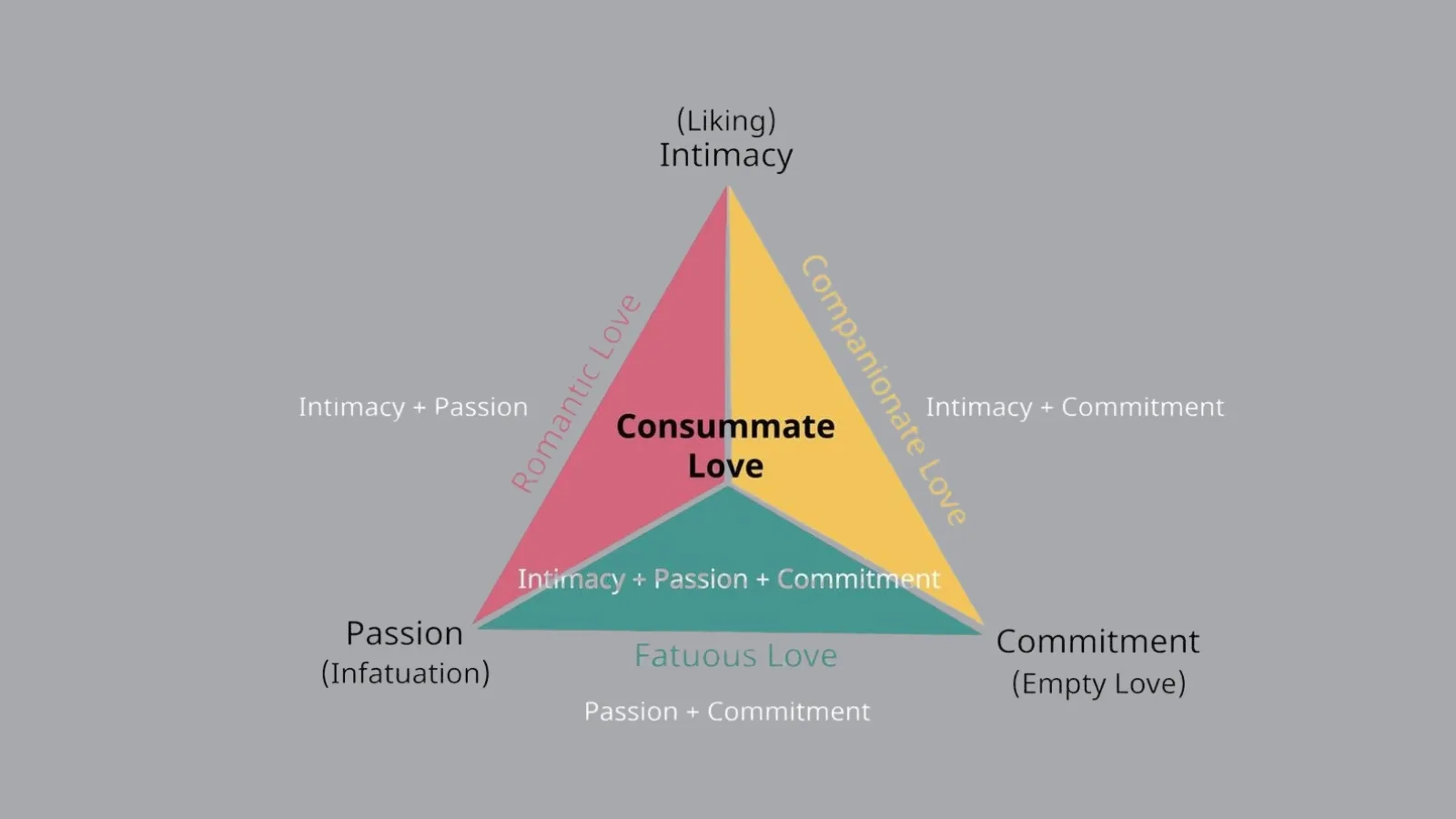
In his Triangular Theory of Love, Sternberg proposed that every romantic relationship is built on three core components:
Intimacy
Passion
Commitment
These three elements form the sides of a triangle. Their balance can change over time and ultimately shapes the quality and longevity of a relationship.
This also explains why some couples who were once deeply in love eventually drift apart. Love does not automatically sustain itself. It requires effort, growth, and mutual investment from both people involved.
Intimacy: The Ability to Be Yourself
Intimacy is more than spending time together or having long conversations.
It is the feeling of:
Being understood
Being heard
Being accepted
Being able to show your authentic self
When intimacy exists, both partners feel comfortable sharing their thoughts, emotions, fears, and personal experiences without worrying about judgment.
This is the foundation of deep emotional connection.
Signs of Intimacy
You can talk for hours without getting bored.
You feel safe expressing your emotions.
You understand each other's thoughts and personalities.
You can be your true self around one another.
Passion: The Spark That Makes Your Heart Race
Passion is often the first thing people think of when they think about love.
It refers to attraction, desire, chemistry, and the excitement of being close to someone.
It's the feeling of:
Getting excited when their message appears on your phone
Looking forward to seeing them
Feeling that they are different from everyone else
Wanting to spend more time together
Passion is usually strongest during the early stages of a relationship.
However, it is also the component most likely to fluctuate over time.
When a relationship relies solely on initial attraction without developing deeper emotional connection or commitment, it often struggles to last once the excitement begins to fade.
Commitment: The Choice to Stay
Many people can feel attracted to each other.
Many people can develop strong feelings.
But not everyone is willing to commit.
Commitment is the conscious decision to choose someone and invest in the relationship long-term.
It means:
Building a future together
Taking responsibility for each other's feelings
Working through challenges instead of walking away
Continuing to choose each other after the honeymoon phase ends
Commitment is what helps relationships survive beyond the initial excitement.
Types of Love According to Sternberg's Triangular Theory
Intimacy + Passion = Romantic Love
This type of love combines emotional closeness with strong attraction.
Typically, couples in this stage:
Feel deeply connected
Enjoy talking for hours
Constantly want to see each other
See each other as special
However, without commitment, the relationship may struggle to survive once the initial excitement fades.
Potential Risk
Falling in love quickly
Strong emotional attraction
Limited long-term stability
Intimacy + Commitment = Companionate Love
This type of relationship is built on trust, understanding, and long-term partnership.
Partners:
Support each other
Know each other deeply
Feel emotionally secure together
However, the relationship may gradually lose some of its excitement and romantic energy.
Potential Risk
Stability without passion
A strong partnership that lacks romantic spark
Passion + Commitment = Fatuous Love
In this type of relationship, attraction is intense and commitment happens quickly.
Couples may:
Fall in love rapidly
Make serious commitments early
Rush major relationship decisions
However, they may not truly know each other on a deeper level.
Potential Risk
Decisions driven by temporary emotions
Limited emotional foundation
Intimacy + Passion + Commitment = Consummate Love
According to Robert Sternberg, this is the most complete form of love.
In consummate love, partners:
Understand each other deeply
Feel attracted to each other
Remain committed to one another
It is more than passion.
More than familiarity.
More than responsibility.
It is the combination of all three elements working together.
This is the type of relationship many people hope to build and maintain over the long term.
Non-Love: When All Three Components Are Missing
If a relationship lacks intimacy, passion, and commitment, Sternberg describes it as Non-Love.
Two people may know each other.
They may interact regularly.
But love has not yet formed.
It is simply a social connection rather than a romantic relationship.
Why Is Lasting Love So Difficult to Find?
Because love is not just about finding the right person.
It is also about building connection, nurturing feelings, and growing commitment over time.
Some people experience passion without intimacy.
Others develop intimacy without passion.
Some have both but never reach commitment.
Healthy, lasting love rarely appears overnight. It is built through countless conversations, shared experiences, and mutual understanding.
Every Relationship Starts with Connection
Before intimacy, passion, or commitment can develop, two people first need the opportunity to connect.
At Clique83, we create real-life social experiences where people can meet, have meaningful conversations, and discover whether emotional connection, attraction, or even a serious relationship might grow between them.
If you're looking for something deeper than endless swiping and short-lived conversations on dating apps, follow Clique83's upcoming social events and start getting to know someone in real life.