
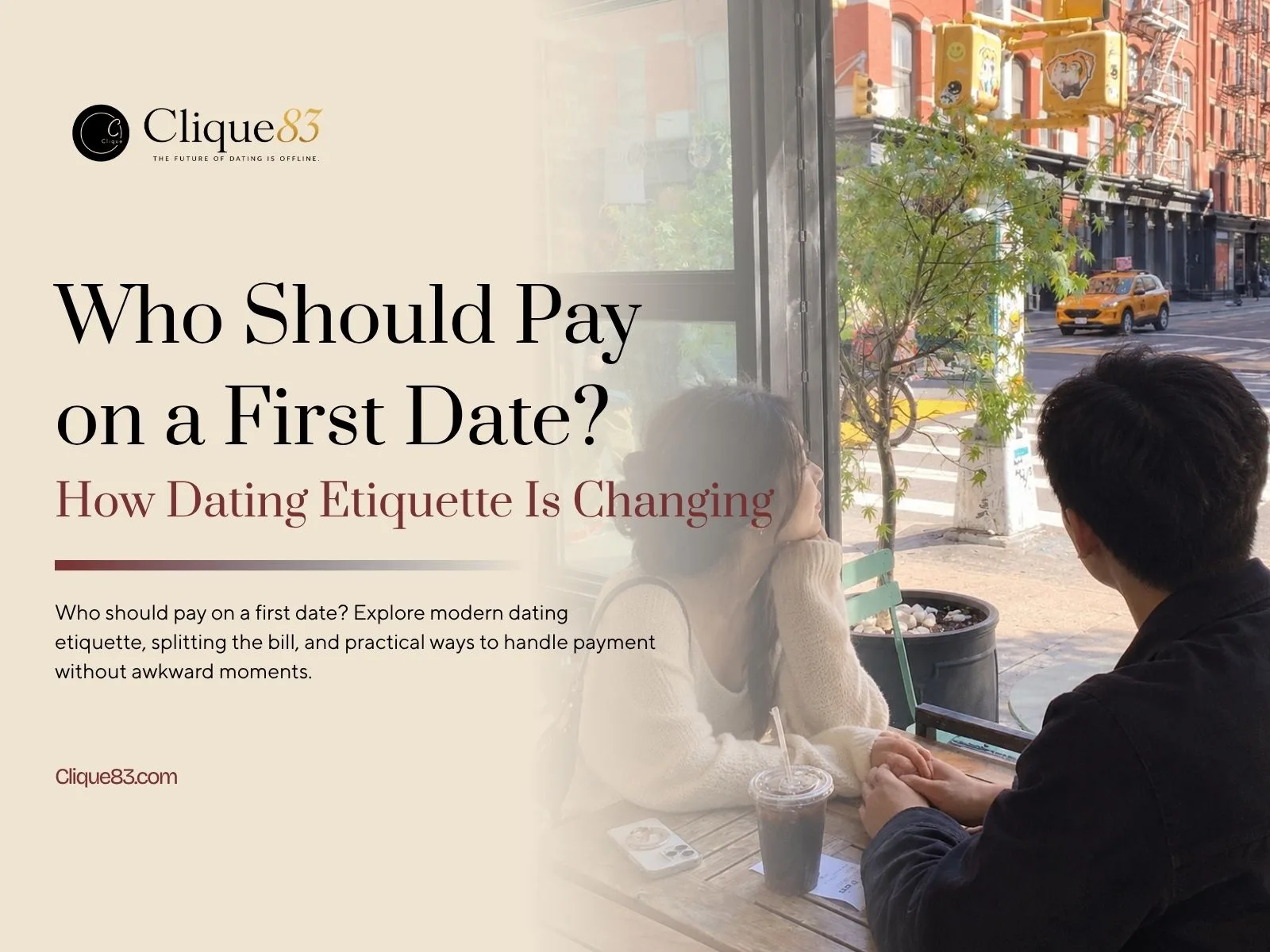
The conversation is going well. You've laughed together, discovered a few things in common, and started feeling comfortable around each other. Then the bill arrives.
Do you reach for your wallet? Wait for your date to offer? Suggest splitting the bill?
A simple payment can suddenly feel like a test of generosity, independence, romantic interest, or even compatibility.
So, who should pay on a first date? There is no universal rule. One person can offer to treat the other, both can split the bill, or each can cover their own expenses. The best approach respects both people's preferences and financial comfort.
Dating etiquette is changing as people bring different expectations about gender roles, equality, and romance into their relationships. Understanding those differences helps you handle the bill with more confidence and less awkwardness.
Why is paying on the first date still such a big deal?
Paying for a first date carries emotional meaning because people associate money with effort, generosity, independence, and romantic interest.
For someone who values traditional courtship, being treated to dinner feels like a thoughtful romantic gesture. Someone who values financial independence might feel more comfortable contributing equally.
Both perspectives reflect personal values, shaped by upbringing, previous relationships, and cultural expectations.
Research shows that traditional expectations remain influential.
According to a 2024 NerdWallet survey, 72% of American adults agreed that men should pay on the first date in heterosexual relationships. Interestingly, men were more likely to agree than women, at 78% versus 68%.
A separate 2024 Pew Research Center study found that younger American adults were generally more accepting than older adults of men splitting the bill on a date with a woman.
Both studies examine American attitudes, so their findings cannot represent every dating culture. However, they illustrate how traditional expectations and more flexible approaches coexist.
The result is a familiar first-date dilemma: two people arrive with different ideas of what paying means, yet neither has discussed those expectations.
Should men still pay on the first date?
Men paying for the first date remains a familiar tradition in heterosexual dating, especially among people who appreciate traditional courtship.
Some men enjoy taking the initiative because paying feels like a natural expression of generosity. Some women appreciate being treated because the gesture makes them feel valued and cared for.
Those preferences are valid when they come from personal choice rather than pressure.
However, gender alone provides limited guidance for how two people want to handle money.
A man might prefer splitting expenses while still being thoughtful and generous in other ways. A woman might enjoy treating someone she likes. People dating someone of the same gender also navigate payment expectations without relying on traditional male-female roles.
A romantic gesture becomes more meaningful when it reflects someone's intentions rather than an obligation attached to their gender.
Instead of assuming that one person must pay, consider how both people express care and what makes them comfortable.
Should the person who asks for the date pay?
A common dating etiquette principle is that the person extending the invitation offers to pay, particularly when they choose the venue or activity.
The reasoning is straightforward: if you invite someone to an experience you have planned, offering to cover the cost is a considerate gesture.
The NerdWallet survey also found that 65% of American adults expected someone who asked them out to pay for the date.
However, asking someone out does not automatically establish a payment agreement.
Consider two invitations:
"I'd love to take you out for dinner. My treat."
"Would you like to grab coffee together this weekend?"
The first clearly communicates an offer to pay. The second simply suggests spending time together.
A casual invitation leaves room for either person to offer, split the bill, or pay individually.
If you're planning something expensive, discussing the cost beforehand shows consideration. It gives your date the opportunity to suggest something within their budget.
A little clarity during planning prevents uncomfortable surprises later.
Is splitting the bill on a first date good etiquette?
Splitting the bill is a reasonable and increasingly visible approach to modern dating, particularly among people who value financial independence or shared responsibility.
Some singles prefer paying their own way because it removes uncertainty about romantic expectations. Others enjoy the sense that both people are contributing to the experience.
However, splitting the bill does not always require an exact 50/50 calculation.
There are several natural ways to handle first-date expenses.
Payment approach | When it works well |
One person pays | Someone genuinely wants to treat their date, and the other person is comfortable accepting |
Split the bill equally | Both prefer sharing the total cost of a similar experience |
Pay individually | Each person orders separately or spends a noticeably different amount |
Share different expenses | One person covers dinner while the other buys dessert or drinks |
Imagine meeting someone for coffee and discovering that the conversation is going so well that you decide to stay for another hour.
One person pays for the first round of drinks, and the other offers to get something to eat.
Neither needs to calculate the precise difference.
The arrangement feels balanced because both are participating willingly.
What matters is finding an approach that leaves each person comfortable, rather than measuring generosity through an exact amount.
How do you decide who pays in different first-date situations?
The most considerate payment arrangement depends on the circumstances surrounding the date.
When you're meeting someone from a dating app
If you have never met in person, a casual coffee date or another affordable activity gives both people room to get acquainted without a significant financial commitment.
Splitting the bill or paying individually is a straightforward option. If someone wants to treat the other, they can offer naturally.
When one person chooses an expensive venue
If you suggest an upscale restaurant, consider your date's budget before making the reservation.
Offering to pay is thoughtful when you are the one requesting a costly experience.
If the venue exceeds your budget, suggest an alternative that feels more comfortable.
When you have different financial circumstances
A first date should feel financially manageable for both people.
If one person earns significantly more, splitting an expensive bill equally might create unnecessary pressure on the person with a smaller budget.
Choosing an affordable activity gives you a simpler starting point. Someone who wants to treat their date is also free to make that offer.
When you prefer traditional dating etiquette
If being treated or taking the initiative matters to you, you're allowed to value that experience.
Just remember that someone with a different payment preference might still be interested in building a meaningful connection.
A difference in dating etiquette is an opportunity to understand each other's expectations.
How to handle the bill without making things awkward
The easiest way to approach payment is to communicate naturally, without treating the conversation as a test.
A few simple phrases help you express what you want while leaving room for your date's preferences.
If you want to pay: "I'd love to get this one, if you're comfortable with that."
If you prefer splitting the bill: "Shall we split this one?"
If someone offers to pay and you're happy accepting: "Thank you, that's really thoughtful."
If you'd rather cover your own share: "That's kind of you, but I'd feel more comfortable paying for mine."
If you want to contribute another way: "Thanks for dinner! How about I get dessert?"
The words themselves are simple. Your tone makes the difference.
A relaxed offer creates space for a genuine response. Insisting repeatedly after someone expresses discomfort makes the interaction harder than necessary.
You also don't need to explain your entire financial philosophy during the first meeting.
A friendly conversation about the bill is usually enough.
Read more: The Right Mindset for Offline Dating
Does paying for the first date mean someone is interested in you?
Paying for a first date can express romantic interest, but the gesture alone is an unreliable measure of attraction or relationship intentions.
Imagine two first dates.
On the first, someone takes you to an expensive restaurant and pays for everything. Throughout the evening, they barely listen when you speak and spend much of the conversation talking about themselves.
On the second, you meet someone for coffee and split the bill. They ask thoughtful questions, remember small details, and make you feel comfortable being yourself.
Which person would you rather see again?
A generous payment does not automatically create a meaningful connection. Likewise, splitting the bill does not mean someone lacks interest.
Some people show affection through gifts and treating others. Others express care through attentive conversation, practical support, or quality time.
If you're trying to understand how someone feels about you, pay attention to the entire interaction.
Do they listen? Respect your choices? Seem genuinely curious about you? Make an effort to keep the conversation comfortable?
Those behaviors offer a broader picture of their intentions.
When does first-date payment become a red flag?
A payment preference becomes concerning when someone uses money to pressure, embarrass, or control the other person.
Offering to pay is a kind gesture. Expecting affection, physical intimacy, or another meeting in exchange crosses an important boundary.
Similarly, expressing a preference for sharing expenses is reasonable. Mocking someone for having different expectations is disrespectful.
Pay attention to how your date handles financial boundaries.
Creating a sense of obligation: Someone suggests that paying for dinner means you owe them romance, intimacy, or another date.
Ignoring your budget: They insist on an expensive activity after you've expressed discomfort with the cost.
Using money to embarrass you: They criticize your income, spending choices, or ability to contribute.
Reacting aggressively to disagreement: A polite conversation about splitting the bill turns into insults or pressure.
An awkward moment over payment is different from a pattern of disrespect.
Someone might simply be nervous, unfamiliar with your preferences, or accustomed to a different dating tradition.
The more revealing question is how they respond when you communicate what makes you comfortable.
Read more: First Date Red Flags: What Is Actually a Red Flag and What Is Just Nervousness?
FAQs
Is it rude to let someone pay for your first date?
Accepting someone's offer is perfectly reasonable when the gesture is sincere and you're comfortable with it. A simple thank-you shows appreciation. Being treated does not create an obligation to continue dating.
Is a man splitting the bill on a first date a red flag?
Splitting the bill alone is not a red flag. People have different financial circumstances and expectations. Consider how he communicates, respects your preferences, and treats you throughout the meeting.
Should a woman offer to pay on the first date?
A woman is welcome to offer if she wants to contribute. Her gesture can reflect independence, appreciation, or generosity without communicating anything definitive about romantic interest.
What if your date insists on paying?
You can accept graciously if you're comfortable. If you prefer to pay your share, express that preference politely. Someone who respects your choice will take your comfort into account.
Should you split the bill if you don't want a second date?
You can offer to pay your share if it feels more comfortable. However, accepting a sincere offer to be treated does not obligate you to meet again. The decision about another date remains yours.
The best first-date etiquette is about mutual respect
The bill arrives at the end of a date, but the way two people treat each other matters throughout the experience.
You might appreciate traditional romantic gestures. You might prefer sharing expenses. You might even change your mind depending on the person and the situation.
Different preferences are a natural part of getting to know someone.
At Clique83, we believe meaningful connections begin when people have the opportunity to meet, talk, and discover each other beyond a profile. Our Clique83’s Dating App experience supports that first real-life meeting while leaving the personal connection in your hands.
The same principle applies to paying for a date: give each other space to express preferences, communicate with kindness, and enjoy the experience.
After all, the most memorable part of a wonderful first date is rarely who picked up the bill. It's how you felt sitting across from that person.
References
El Issa, E. (2024, February 13). Survey: Most Say Men Should Pay for First Date in Hetero Couples. NerdWallet.
Horowitz, J. M., & Parker, K. (2024, October 17). Behaviors People Find Acceptable and Unacceptable in Men. Pew Research Center.