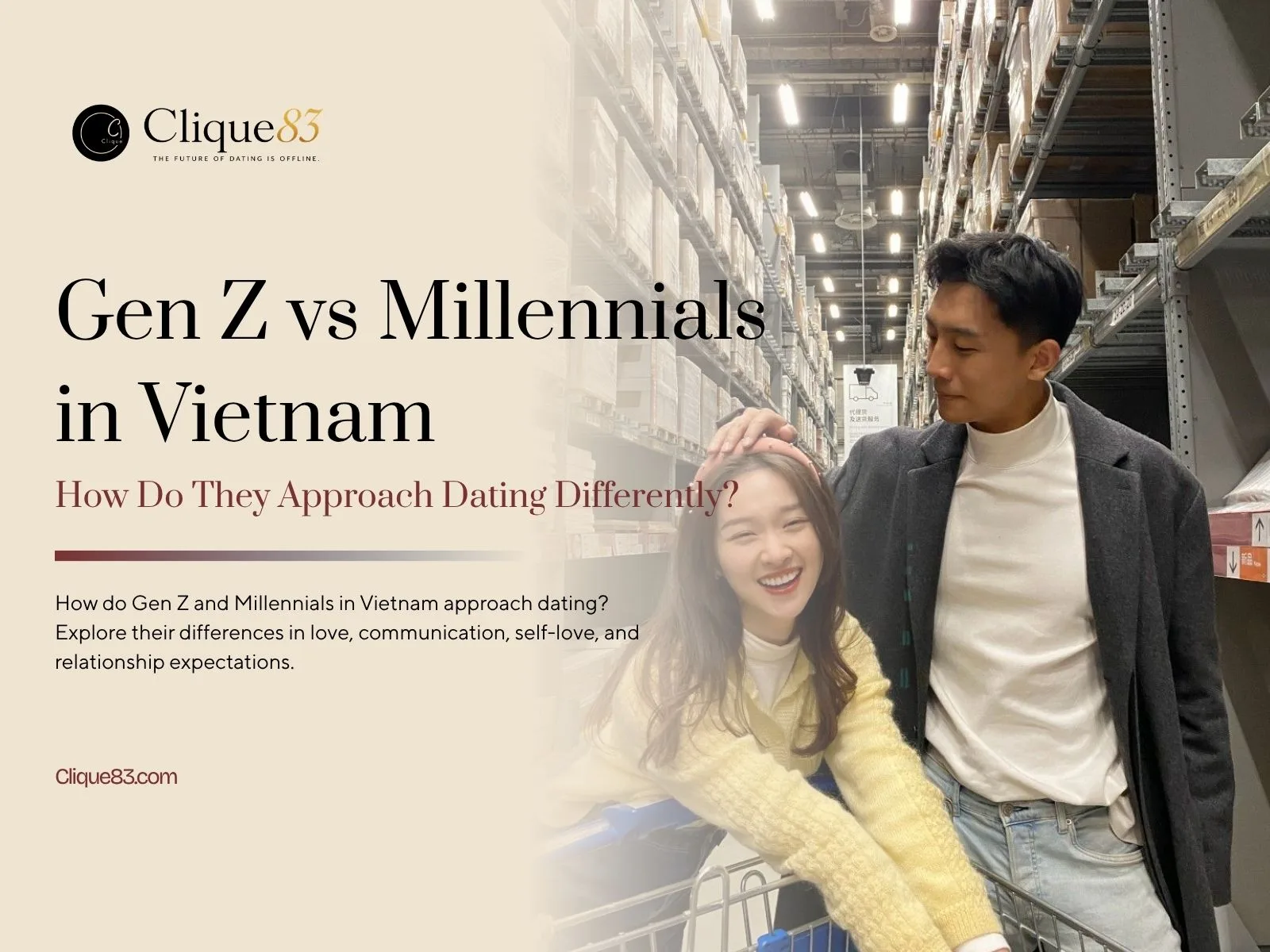
A 26-year-old and a 35-year-old might both want to find love, yet approach a first date with very different expectations. One wants time to explore the connection, while the other hopes to understand early if the relationship has a future.
Neither approach is inherently better. Their expectations reflect different experiences, priorities, and stages of life.
So, how do Gen Z and Millennials in Vietnam actually approach dating differently? From where they meet potential partners to how they communicate feelings and think about commitment, understanding these differences helps you navigate modern dating with greater confidence.
What are the main dating differences between Gen Z and Millennials?
Gen Z and Millennials in Vietnam may differ in how they discover romantic connections, express interest, and decide when to take a relationship seriously. However, age alone does not determine someone's dating intentions.
Gen Z generally refers to people born between 1997 and 2012, while Millennials were born between 1981 and 1996. Among adults in 2026, that means Gen Z daters are approximately 18–29 years old, while Millennials are around 30–45.
These age groups also represent different stages of life. Some Gen Z singles are studying or building their careers, while many Millennials have spent years working, navigating relationships, and developing their own routines.
Here is how their dating experiences can differ:
Dating aspect | Gen Z | Millennials |
Meeting new people | May have more opportunities through university, social communities, and digital platforms | May rely more on intentional introductions as work and established routines shape social life |
Relationship expectations | May want space to explore a connection before defining it | May prefer earlier conversations about relationship goals |
Communication | Familiar with digital interactions, while emotional openness can still feel difficult | May draw on previous relationship experiences when communicating expectations |
Common challenges | Unclear intentions, mixed signals, and uncertainty about emotional connection | Limited social opportunities, demanding schedules, and concerns about starting over |
These are patterns worth exploring rather than fixed characteristics of either generation.
A Gen Z professional approaching 30 may have more in common with a Millennial in their early 30s than with someone who has just entered university.
The more useful question is how your experiences and current priorities shape the way you approach love.
1. Where do Gen Z and Millennials meet potential partners?
The biggest difference in meeting potential partners is sometimes the social environment each generation finds itself in.
Gen Z: More opportunities through digital and social communities
Gen Z has grown up with social media, instant messaging, and online communities as familiar parts of everyday communication.
A romantic connection might begin through Instagram, a dating app, a university activity, or a shared interest.
Imagine meeting someone through a group of friends. You follow each other on social media, react to a few stories, and gradually begin chatting. By the time you arrange a first date, you already know something about each other's interests and daily lives.
Digital communication makes it easier to begin exploring a connection before meeting in person.
However, a long online conversation provides only part of the picture. How someone responds to your feelings, carries a conversation, or makes you feel comfortable becomes clearer through real interaction.
Millennials: Finding new connections requires more intention
Meeting someone new can become more complicated once your social life settles into a familiar routine.
You spend most weekdays working. Your closest friends already have partners, families, or busy schedules. Weekend gatherings involve people you have known for years.
Even when you feel ready for a relationship, opportunities to meet someone outside your existing circle may seem limited.
Dating apps offer another way to connect. According to Decision Lab's 2022 research on dating apps in Vietnam, 56% of surveyed single Vietnamese respondents used at least one dating app. The research also found that Millennials and Gen Z spent more time per dating-app session than Gen X users.
The findings reflect Vietnamese respondents in 2022 rather than a current comparison of the two younger generations. Still, they challenge the assumption that online dating belongs exclusively to Gen Z.
The practical difference is access to opportunities. When everyday life introduces fewer new people, making room for dating becomes a more deliberate choice.
Explore more: Where to Meet New People When You Do Not Want to Use Dating Apps
2. What do Gen Z and Millennials look for in a relationship?
Both generations want companionship and meaningful connections, although the timing and expectations surrounding a relationship can differ.
Gen Z: Discovering what connection means to them
Some Gen Z singles approach dating as an opportunity to understand another person while also learning more about themselves.
At 24, you might enjoy someone's company without immediately knowing how the relationship will develop. You want to see how naturally the conversation flows, what you share in common, and how comfortable you feel together.
A first date gives you a chance to explore those feelings.
Relationship goals can also coexist with personal ambitions.
In Milieu Insight's 2025 survey of 3,000 respondents across six Southeast Asian countries, 31% of Vietnamese Gen Z respondents prioritized their careers over family.
That finding suggests career development is an important consideration for part of the younger generation. It does not mean that Gen Z is uninterested in committed relationships.
Someone can want a meaningful relationship while still deciding what place it should have in their current life.
Explore more: How Is Gen Z in Vietnam Changing the Way They Date?
Millennials: Understanding where the relationship is going
For some Millennials, previous relationships have made their priorities clearer.
You may already know how important emotional availability is to you, what kind of communication feels healthy, or which differences in lifestyle have been difficult to navigate before.
As a result, you might approach dating with more specific questions.
Does this person have time for a relationship? Are they emotionally available? Do your expectations about commitment point in a similar direction?
Consider someone who is 36 and wants to build a lasting partnership. After several enjoyable dates, they may want an honest conversation about where things are going.
Their intention is to understand if both people are investing in a connection with similar expectations.
What matters is being clear about your own intentions while giving the other person space to express theirs.
Someone younger may be ready for marriage, while someone older may still be exploring what they want. Understanding that difference early helps both people make thoughtful choices.
Read more: Why Does It Feel Harder to Open Up in Dating as We Get Older?
3. How do the two generations communicate romantic interest?
Gen Z and Millennials may approach romantic communication differently, particularly when conversations move beyond casual flirting into personal feelings.
A message can be easy to send. Expressing genuine interest is sometimes much harder.
Gen Z: Comfortable with digital communication, cautious with vulnerability
Gen Z is familiar with communicating through messages, reactions, voice notes, and social media.
Yet being comfortable with technology does not automatically make someone comfortable discussing emotions.
In its 2025 D.A.T.E. Report, Hinge surveyed approximately 30,000 users worldwide and found that:
84% of Gen Z respondents wanted to find new ways to build deeper emotional connections.
Gen Z respondents were 36% more hesitant than Millennials to initiate a deep conversation on a first date.
These are findings among international Hinge users, rather than a representative sample of Vietnamese singles.
Nevertheless, they highlight a recognizable dating experience: wanting to connect with someone while worrying about appearing too interested.
You might enjoy a date and spend the evening wondering if you should text first. Or you might hesitate to ask a meaningful question because you are unsure how the other person will respond.
The difficulty is finding a way to express your interest without feeling overly exposed.
Millennials: Using relationship experience to communicate expectations
For Millennials who have experienced longer relationships or difficult breakups, previous experiences can influence how they approach new connections.
Someone who once spent months in an undefined relationship may now prefer a direct conversation about intentions.
Another person may have learned to take things slowly after moving too quickly in the past.
Experience can bring clarity, although it can also create hesitation.
For example, a 34-year-old who has been single for several years may know exactly what they want from a relationship but still feel nervous about being emotionally vulnerable again.
Across both generations, direct and considerate communication helps reduce unnecessary uncertainty.
If you enjoy someone's company, a simple message such as "I had a really nice time with you. I'd love to see you again" communicates interest without putting pressure on the other person.
You don't need to hide your feelings to protect yourself from every possible disappointment.
4. How do Gen Z and Millennials think about commitment and marriage?
Expectations around commitment are shaped by personal readiness, financial responsibilities, and family values. All of these remain relevant to dating in Vietnam.
According to Vietnam's 2024 Mid-Term Population and Housing Census, the average age at first marriage reached 27.3 years, an increase of 2.1 years compared with 2019.
The figures were 29.4 years for men and 25.2 years for women.
These numbers show that marriage is happening later across the Vietnamese population. They do not establish that one generation values marriage more than another.
Gen Z: Balancing independence with family expectations
Gen Z may have more flexibility in how they imagine their future, but family expectations still influence romantic decisions.
A September 2026 study published in Culture, Health & Sexuality interviewed 25 Vietnamese Gen Z university students across five cities.
The researchers found that participants considered family approval, personal reputation, and the development of emotional attachment when using dating apps. Some evaluated potential partners against anticipated parental expectations before beginning an interaction.
The study, Swiping between worlds, provides insight into the experiences of those students, rather than a nationwide measure of Gen Z behavior.
Its findings reveal something important about dating in Vietnam: personal independence and family influence can exist together.
A young person may want to make their own romantic decisions while still caring deeply about how a future partner will be welcomed by their family.
Millennials: Considering how love fits into an established life
As people move through their 30s and 40s, their decisions about relationships can involve responsibilities they have already taken on.
Some are focused on financial stability or caring for family members. Others have experienced long-term relationships, divorce, or significant changes in their personal lives.
When meeting someone new, they may consider how a relationship would work within those existing commitments.
Two people can have strong romantic feelings and still need to discuss where they want to live, how much time they can spend together, or what building a family means to them.
The important difference is the life each person is inviting someone else into.
A healthy relationship gives both people room to discuss those realities while continuing to enjoy getting to know one another.
5. How does self-love influence dating priorities across generations?
Self-love has become a visible part of how many young Vietnamese adults talk about happiness, independence, and relationships.
For some, loving yourself means protecting your emotional well-being, pursuing personal interests, and building a life you enjoy before inviting someone else into it.
Both Gen Z and Millennials embrace these values, although their experiences and life circumstances influence how they express them.
Gen Z: Making room for personal happiness and experiences
For some Gen Z singles, a fulfilling life already includes meaningful experiences, personal interests, and relationships with friends and family.
They might save money to attend a favorite artist's concert, travel to another city for a music festival, explore new hobbies, or simply enjoy having the freedom to make their own plans.
These interests are more than occasional entertainment. They can become important parts of someone's identity and social life.
According to Agoda's 2026 Travel Outlook findings, 21% of surveyed Vietnamese Gen Z travelers planned trips specifically around concerts, festivals, or sporting events.
The finding reflects how some young adults actively make space for experiences that bring them happiness, even when those experiences require planning, saving, and traveling.
Vietnam's broader economic and educational development has also changed the environment in which younger generations grow up. As the World Bank's overview of Vietnam documents, access to education and living standards have improved substantially over recent decades.
Some Gen Z adults have consequently grown up with greater opportunities to explore interests and make personal choices. Family circumstances still vary considerably, and those improvements do not mean everyone experienced an easier or more supportive childhood.
For someone who already enjoys their independence, dating may feel like an opportunity to share that happiness rather than a necessary step toward feeling complete.
They might welcome a romantic relationship while remaining protective of the things that matter to them.
Millennials: Valuing personal fulfillment alongside established responsibilities
Self-love is equally meaningful for Millennials.
Many have worked hard to establish careers, become financially independent, or create a lifestyle they enjoy. Over time, they may have learned the importance of rest, emotional boundaries, and spending time on themselves.
Personal experiences remain important to this generation, too.
A Vietnam Report survey discussed by VTV in December 2025 found that nearly 77% of surveyed Millennials planned to increase their travel spending in 2026.
The findings suggest that investing in personal experiences is shared across generations rather than being a Gen Z-only behavior.
For a 35-year-old professional, self-love might mean taking a long-awaited holiday, maintaining friendships, enjoying financial independence, or choosing carefully how much time to invest in a new relationship.
Some Millennials also grew up with stronger expectations about settling down by a certain age. Their current desire for personal fulfillment may reflect years of balancing individual wishes with family and social responsibilities.
The meaningful difference lies in how each person makes room for a relationship within the life they already value.
You can love your independence and still welcome someone into your life. A relationship becomes more meaningful when both people respect each other's individuality and have a genuine desire to share their experiences.
Why does dating feel different in your 20s and 30s?
Dating in your 20s and 30s can feel different because your social opportunities, emotional experiences, and daily responsibilities evolve.
Consider two examples.
At 24: You meet someone you genuinely like. You spend time together and exchange messages regularly, yet you are unsure how to define the relationship. You worry that asking about commitment too early might change the connection.
Your main difficulty is understanding your feelings and finding the confidence to communicate them.
At 35: You know you want a meaningful relationship. Your career is stable, and you are comfortable with your lifestyle. However, most weeks pass without meeting anyone new. The thought of beginning another conversation from scratch feels exhausting.
Your main difficulty is creating an opportunity for someone new to enter your life.
Both situations involve a desire for connection. The obstacles are different.
For younger singles, understanding their expectations and communicating interest may deserve more attention. For busy working adults, creating time and social opportunities can be equally important.
There is also the emotional experience that comes with age.
After disappointment, people sometimes become more careful about trusting someone new. That caution can be valuable when it helps you recognize your boundaries, although it can make opening up feel more difficult.
If you recognize yourself in the second situation, our guide to why dating feels harder when you have limited time explores how working adults can make room for new relationships.
Regardless of age, dating becomes more manageable when you understand what is making it difficult for you personally.
What if you are dating someone from a different generation?
Dating someone from a different generation can be a rewarding experience. The important part is understanding each other's expectations without assuming that age explains everything.
A 28-year-old and a 36-year-old, for example, may enjoy the same hobbies, share similar values, and feel comfortable together. Still, they may have different ideas about how quickly a relationship needs to progress.
Here are four ways to navigate those differences.
Talk about what you are looking for. You can discuss your relationship goals naturally without turning the first date into a serious interview. Questions like "What are you hoping to find through dating right now?" give both people space to share their intentions.
Understand each other's communication habits. Some people enjoy checking in through messages throughout the day. Others prefer fewer messages and more meaningful conversations in person. Discussing what feels natural to each of you prevents unnecessary misunderstandings.
Respect different timelines. One person may be thinking about marriage in the next few years, while the other wants more time before making that decision. Understanding those expectations helps you decide how to move forward together.
Pay attention to how you feel in person. Age, interests, and life goals provide useful context, but your experience together reveals something equally important. Notice how the other person listens, responds to differences, and respects your boundaries.
You can learn more about approaching a first meeting with confidence in our guide to the right mindset for offline dating.
Finding meaningful connections beyond generational differences
Gen Z and Millennials have grown up with different technologies, social environments, and expectations around relationships.
Yet the experience of wanting to be understood by someone remains remarkably familiar.
You might be 25 and uncertain about expressing your feelings. You might be 38 and wondering how to meet someone after years of focusing on work. Either way, a meaningful relationship begins with the opportunity to get to know another person.
At Clique83, we believe technology is most helpful when it brings people closer to that opportunity.
Clique83’s Coffee Date Dating App offers a different way to meet someone beyond continuous swiping or lengthy conversations that stay online. Through AI-supported matching, members receive one introduction at a time, along with a Match Letter that provides more context about the person they are being introduced to.
When both people decide they want to meet, Clique83’ app supports the arrangements for a real-life date.
The experience gives you space to discover a connection through conversation, while the decision about what happens next remains yours.
Your generation may influence how you approach dating. The relationship you build depends on the two people involved.
FAQs
Is Gen Z less interested in serious relationships than Millennials?
There is insufficient representative comparative evidence from Vietnam to conclude that Gen Z is less interested in serious relationships. People in both generations have different dating goals, ranging from exploring new connections to seeking a long-term partner. Individual intentions are more useful than age-based assumptions.
Do Millennials still use dating apps in Vietnam?
Yes. Dating apps are used across multiple adult age groups, including Millennials. Decision Lab's 2022 Vietnamese dating-app research included both Millennial and Gen Z users, although it does not establish their current usage rates in 2026.
Can Gen Z and Millennials have successful relationships together?
Yes. A generational difference does not automatically prevent a meaningful relationship. Shared values, mutual respect, honest communication, and compatible expectations about the future matter more than belonging to the same generation.
Does a difference in dating expectations mean two people are incompatible?
Different expectations are a reason to have a conversation. Two people may approach dating at different speeds and still build a connection together. What matters is understanding each other's priorities and deciding freely how the relationship develops.
References
Agoda. (2026, April 22). Vietnamese Gen Z embrace bite-sized, frequent and experience-first travel across the region.
Ban, T. Q. G., & Pham, C. T. (2026). Swiping between worlds: Anticipatory family filtering, face-work and gendered reputation in Vietnamese Generation Z university students’ use of dating applications. Culture, Health & Sexuality, 1–14.
General Statistics Office of Vietnam. (2025). Press release: Results of the 2024 mid-term population and housing census.
Hinge. (2025, November 19). Hinge’s new D.A.T.E. report: How Gen Z daters can close the communication gap in 2026.
Huynh, T. (2022, February 14). This Valentine’s day, Vietnamese are swiping right for love. Decision Lab.
Milieu Team. (2025, April 16). How views on marriage, family, and home ownership are evolving across Southeast Asia. Milieu Insight.
World Bank Group. (n.d.). Viet Nam: Overview.
Xuân Tựu, Paven Nguyễn, & Đặng Hiếu. (2025, December 3). Gần 54% Gen Z lên kế hoạch du lịch nhiều hơn trong năm 2026. VTV.